When most people picture a tiny house on wheels, they imagine a compact single-box layout with every room squeezed under one roof. But a new build out of Auburndale, Florida is challenging that assumption in a big way. This 180 square foot home separates its living space and bathroom into two distinct pavilions connected by a built-in breezeway — a design choice that’s turning heads in the tiny home community. For vacation rental managers and owners exploring unique or alternative accommodations, this kind of innovative layout is worth paying close attention to.
A Two-Pavilion Design That Rethinks the Tiny Home Blueprint
Rather than stacking everything under a single roof, this Florida build uses a breezeway to physically separate the living area from the bathroom, creating a surprisingly spacious feel in just 180 square feet.
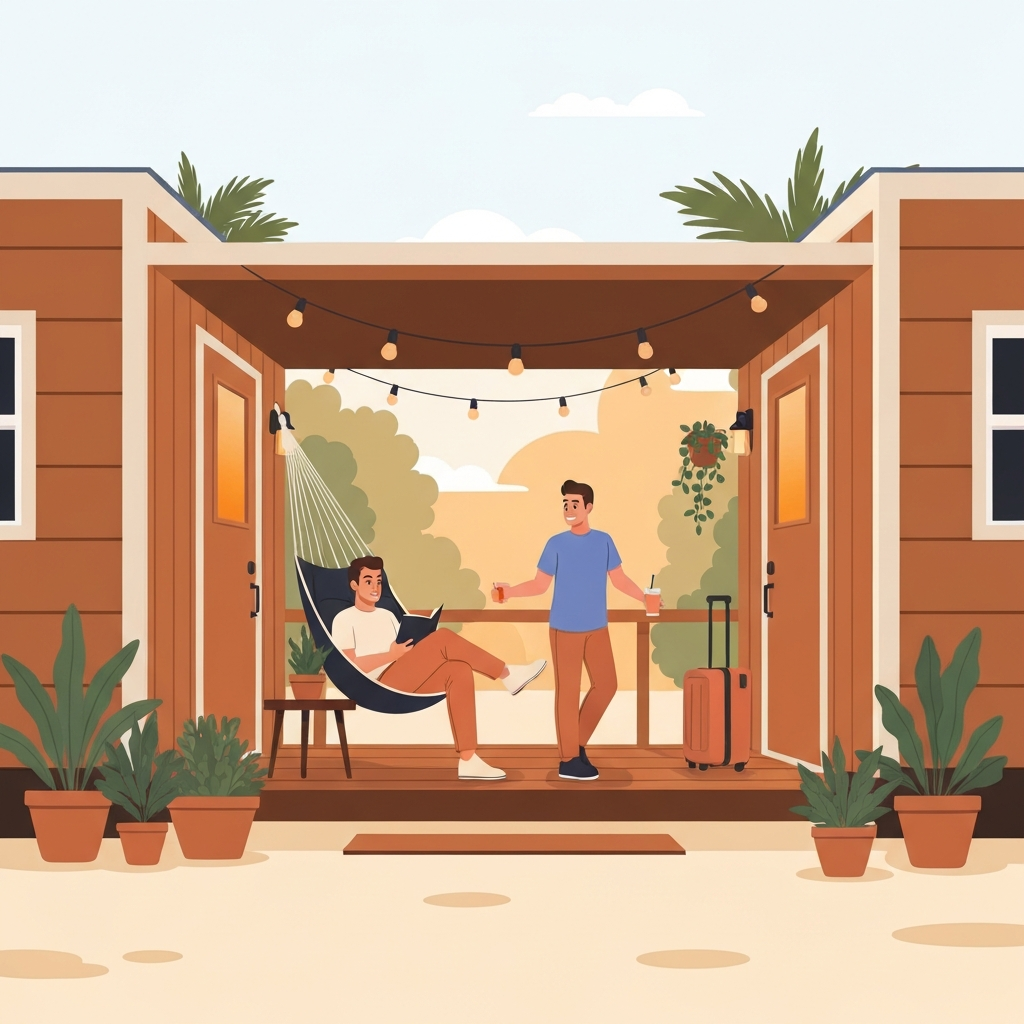
The typical tiny house on wheels relies on walls, curtains, or clever furniture arrangements to carve out distinct zones within a single structure. This Auburndale build throws that playbook out entirely. By splitting the home into two pavilions — one housing the main living and sleeping area, the other dedicated to the bathroom — and connecting them with a covered breezeway, the design creates a sense of separation and airiness that most tiny homes struggle to achieve.
The breezeway itself isn’t just a practical connector. It functions as an outdoor living space, adding a dimension of usability that makes the overall footprint feel larger than 180 square feet. This kind of intentional design thinking reflects a growing trend in the alternative accommodations space, where guests are increasingly seeking unique, well-thought-out stays rather than simply a place to sleep.
Why Vacation Rental Owners Should Pay Attention to Unconventional Builds
Unique architectural features like a breezeway pavilion design can be a powerful differentiator in a crowded short-term rental market.
The short-term rental market has become incredibly competitive, and guests browsing platforms like Airbnb or Vrbo are often drawn to listings that offer something they can’t find anywhere else. A tiny home with a breezeway separating its spaces isn’t just a novelty — it’s a marketable feature. Properties with distinctive design elements tend to generate stronger word-of-mouth, earn more social media attention, and command higher nightly rates than cookie-cutter accommodations.
For property managers overseeing a portfolio that includes or is considering alternative accommodations — think glamping sites, tiny homes, or off-grid cabins — builds like this one signal that the market for creative, architecturally interesting rentals is alive and growing. Understanding what makes these properties appealing to guests can help managers make smarter acquisition or development decisions.
Managing a unique property also comes with operational considerations. Platforms like Lodgix can help streamline bookings, guest communication, and maintenance scheduling for unconventional rentals, so managers can focus on the guest experience rather than getting bogged down in logistics.
Florida’s Tiny Home Scene and the Broader Shift Toward Alternative Accommodations
Florida continues to be a hotspot for innovative tiny home builds, reflecting broader consumer demand for affordable, experience-driven travel accommodations.
Auburndale, Florida may not be the first place that comes to mind when thinking about cutting-edge architecture, but the state has quietly become a hub for creative tiny home construction. Florida’s climate — with its warm temperatures and indoor-outdoor lifestyle — makes it an ideal setting for designs that blur the line between interior and exterior living, which is exactly what this breezeway build does so effectively.
More broadly, the rise of tiny homes as vacation rentals reflects a shift in traveler priorities. Guests are increasingly interested in sustainable, minimalist, and experience-focused stays. A well-designed tiny home on wheels can check all of those boxes while also offering owners a relatively lower-cost entry point into the vacation rental market compared to traditional properties.
As alternative accommodations continue to gain traction, vacation rental managers who stay ahead of design and hospitality trends will be better positioned to attract a new generation of experience-hungry travelers.
Staying informed about emerging trends in tiny home design and alternative accommodations isn’t just interesting — it’s a genuine competitive advantage for anyone operating in today’s vacation rental market. Keep an eye on innovative builds like this one; they often signal where guest preferences are heading next.
Source: Modern Tiny Home on Wheels with Built-In Breezeway Separating Living and Bath, Tinyhousetalk.com
Key Takeaways
- A 180 sq ft tiny home in Auburndale, Florida uses a two-pavilion design with a breezeway to separate living and bathroom spaces, defying the traditional single-box tiny home layout.
- Unique architectural features like a breezeway can make a vacation rental stand out on booking platforms and potentially command higher nightly rates.
- Florida’s climate makes it well-suited for indoor-outdoor designs, and the state is emerging as a hub for innovative tiny home construction.
- Traveler demand for sustainable, minimalist, and experience-driven accommodations is fueling the growth of tiny homes as short-term rentals.