
If you’re a short-term rental manager, there’s a pretty good chance that Airbnb, VRBO, and Booking.com account for the lion’s share of your reservations. And honestly? That makes sense on the surface. These platforms bring you guests on autopilot, handle a lot of the marketing heavy lifting, and offer trust signals that a new property can’t easily build alone. But here’s the uncomfortable truth: every booking that comes through an OTA chips away at your margins, your guest relationships, and ultimately, your control over your own business. Let’s dig into why so many managers stay stuck in this cycle and what it actually takes to flip the script toward a direct-booking-first model.
Why Managers Lean So Heavily on OTAs
OTAs offer instant exposure and booking volume, which makes them feel indispensable even when they’re eroding profitability.The honest answer to why most property managers let OTAs consume 70-90% of their availability is simple: it’s the path of least resistance. Airbnb alone attracts hundreds of millions of monthly visitors, and matching that organic reach independently is genuinely hard. For new managers, OTAs solve the cold-start problem — you list a property and within days you’re getting bookings, reviews, and cash flow. There’s no need to build a website, run ads, or figure out SEO.
But this convenience comes at a real cost. Service fees, commissions, and payment processing can easily total 15-20% per booking when you combine host and guest fees. Add in the fact that OTAs own the guest relationship, restrict your ability to communicate directly, and can suspend your listing without warning, and you start to see why dependence is risky. Many managers also report that OTA guests tend to be more price-sensitive and less loyal than direct bookers, leading to higher churn and lower lifetime value.
What a Direct-Booking-First Model Actually Looks Like
Top-performing managers consistently report direct bookings making up 40-60% or more of their reservations, dramatically boosting margins and repeat business.Industry data from sources like Rental Scale-Up, Key Data, and VRMA surveys suggests that high-performing property managers often pull 30-50% of bookings directly, with elite operators pushing past 60%. Compare that to the industry average, which hovers around 10-20% direct, and you can see the gap between average and exceptional. The financial impact is significant — saving 15% on a $3,000 booking is $450 straight to your bottom line, and that compounds across hundreds of reservations per year.
A direct-booking-first model doesn’t mean abandoning OTAs entirely. It means treating them as a customer acquisition channel rather than your primary sales engine. You use Airbnb to attract first-time guests, then work hard to convert them into repeat direct bookers. Over time, your owned channels — website, email list, returning guests — become the foundation, and OTAs become a top-of-funnel tool you can scale up or down as needed.
Practical Tactics to Drive Up Direct Bookings
Driving direct bookings requires a combination of a strong website, smart guest data capture, and consistent marketing to past guests.Here’s where the rubber meets the road. If you want to grow direct bookings meaningfully, you need to invest in a few key areas:
- A professional, bookable website. Your site needs fast load times, mobile optimization, real-time availability, and a seamless checkout experience. If guests have to email you or wait for a response, you’ve already lost most of them.
- SEO and local content. Write destination guides, neighborhood overviews, and seasonal travel content that rank for the terms your guests are actually searching. “Things to do in Gatlinburg in October” can be a goldmine.
- Email marketing. Capture every guest’s email (even from OTA stays where allowed) and send seasonal promotions, exclusive direct-booking discounts, and personalized recommendations. Past guests are your highest-converting audience by a wide margin.
- Loyalty incentives. Offer 10-15% off direct bookings, free early check-in, or perks like welcome baskets. Make the value of booking direct undeniable.
- Paid search and retargeting. Google Ads for branded property searches and retargeting visitors who didn’t book can be surprisingly cost-effective.
- Social proof on your own site. Display real guest reviews, professional photography, and trust badges. Many guests abandon direct booking because the site feels less trustworthy than Airbnb — fix that.
- Strong guest communication. During and after every stay, mention your direct booking site. A simple “next time, book with us directly and save 10%” goes a long way.
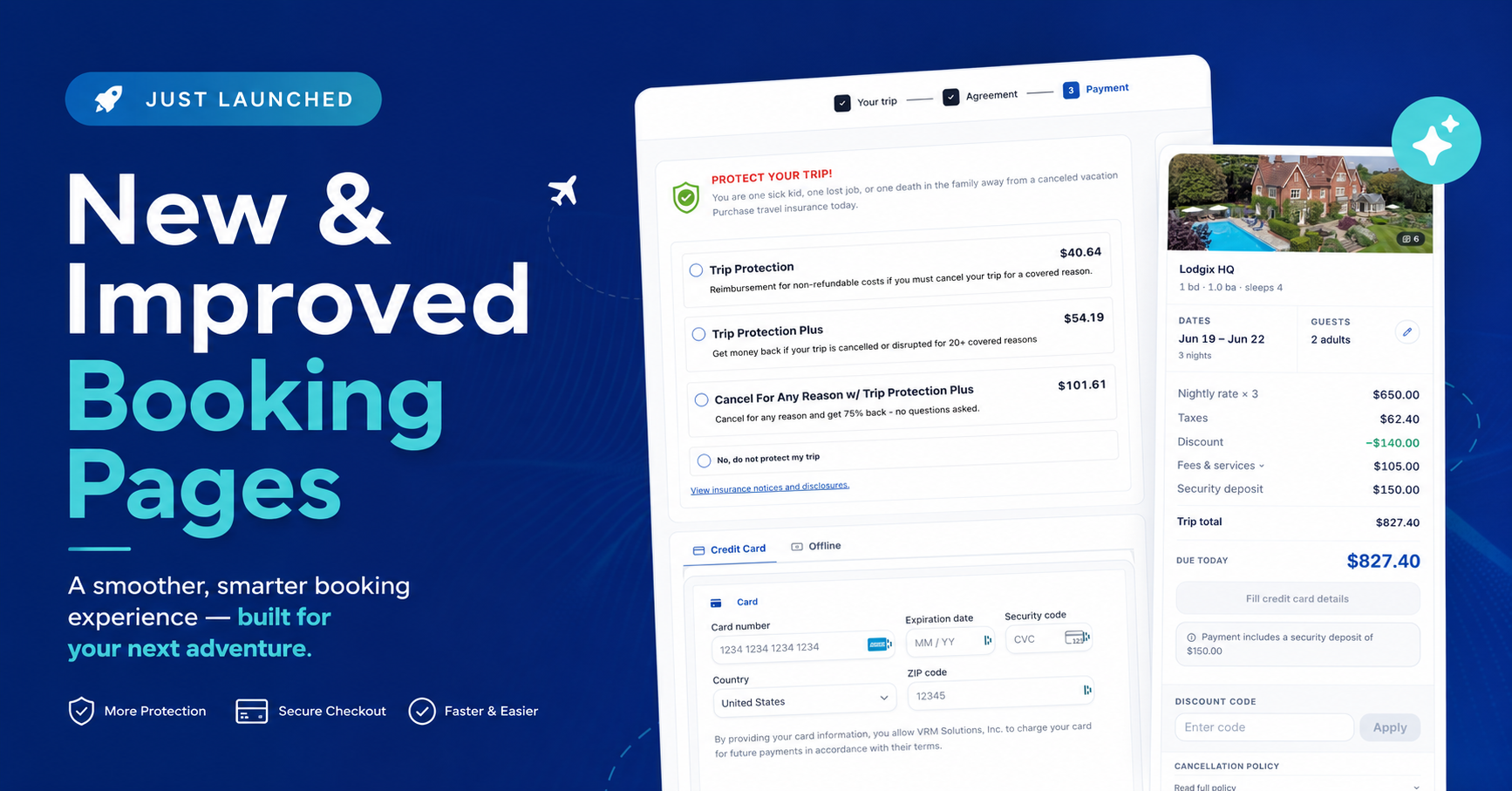
This is also where having the right tech stack matters. Platforms like Lodgix include built-in direct booking websites, integrated email marketing, and guest management tools that make it much easier to capture, nurture, and convert repeat guests without juggling a dozen separate systems.
The Long Game: Building a Brand, Not Just a Listing
Reducing OTA reliance is ultimately about building a recognizable brand that guests seek out by name.The managers who hit 50%+ direct booking rates didn’t get there overnight, and they didn’t get there by gaming any one tactic. They built brands. Guests recognize their company name, follow them on Instagram, sign up for their newsletter, and book directly because they trust the experience. That kind of brand equity takes years of consistent guest experiences, sharp visual branding, and showing up where your audience spends time — whether that’s social media, travel blogs, or local partnerships with restaurants and tour operators.
It also means thinking about your portfolio as a hospitality business, not a collection of listings. What’s your story? What makes staying with you different? When a guest can answer those questions, they don’t need Airbnb to validate their booking decision. They book direct because they want your properties, not just any property in the area.
Breaking free from OTA dependence isn’t easy, and it’s not a switch you flip overnight. But every percentage point you shift from OTA to direct is money back in your pocket, a stronger relationship with your guests, and more resilience against the next algorithm change or policy update. Start small, be consistent, and treat your direct channel like the most important asset in your business — because it is.
Key Takeaways
- OTAs dominate bookings because they offer instant exposure, but they cost managers 15-20% in fees and control of the guest relationship.
- Top-performing short-term rental managers generate 40-60% or more of bookings directly, compared to the industry average of 10-20%.
- Driving direct bookings requires a professional website, SEO content, email marketing, loyalty incentives, and consistent guest communication.
- Building a recognizable brand is the long-term key to making guests seek you out rather than relying on OTA discovery.
- OTAs should be used as a customer acquisition tool, not your primary sales channel.